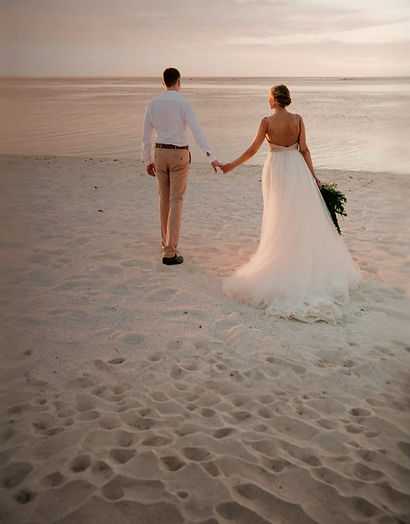



Wedding Ceremony Add-Ons | Unity Rituals That Don’t Feel Forced
Unity rituals can be a beautiful addition to a wedding ceremony — but only when they feel authentic.
Many couples worry that adding a ritual will make the ceremony feel:
Awkward
Too scripted
Too long
Disconnected from who they are
The good news?
Wedding ceremony add-ons don't have to feel performative.
When chosen intentionally, unity rituals can quietly add meaning without taking attention away from the moment itself.
At Dazzling Vows, we help couples throughout Southwest Florida create ceremonies that feel personal, natural and emotionally grounded — whether it's an intimate wedding, beach ceremony, elopement or vow renewal.

What Is A Unity Ritual?
A unity ritual is simply a symbolic moment that represents two people becoming one partnership.
At its best, it usually:
✓ Takes under three minutes
✓ Requires little explanation
✓ Feels natural for the couple
✓ Supports the ceremony flow
📌 If a ritual feels like a performance, it's probably not the right fit.
Why Some Unity Rituals Feel Forced
Most awkward moments happen because couples feel like they have to include something.
Common reasons:
• Including a ritual only because it seems expected
• Long explanations
• Complicated props
• Too much focus on symbolism
• Taking attention away from the vows
The strongest moments often feel simple.
Planning a wedding in Naples, Fort Myers, Estero, Bonita Springs or anywhere in Southwest Florida? Dazzling Vows helps couples create meaningful ceremonies that feel natural, personal and stress-free.
📞 Call or text: 239-302-0720🌐 dazzlingvows.com
Unity Ritual Ideas That Feel Natural
Shared Breath Or Quiet Pause
One of the most meaningful rituals requires nothing at all.
How it works:
• Hold hands
• Take one deep breath together
• Pause before vows
Why couples love it:
✓ No props
✓ No explanation
✓ Creates emotional grounding
This works especially well for couples who prefer subtle moments.
Ring Warming (Simplified)
Traditional ring warming sometimes feels long.
A simpler approach:
• Hold the rings together briefly
• Share a silent intention
• Exchange rings naturally afterward
The symbolism stays while the ceremony keeps moving.
Unity Sand (When Kept Minimal)
Unity sand can still feel meaningful when simplified.
What works best:
• Neutral or natural sand colors
• One short explanation
• Place it after vows
This often works especially well for beach weddings in Southwest Florida.
Handfasting Without The Long Explanation
Handfasting does not need elaborate storytelling.
Simple version:
• One ribbon or cord
• Gentle wrap around hands
• Brief explanation only if needed
The result feels intimate rather than theatrical.
Shared Promise Instead Of A Physical Ritual
Sometimes the best add-on isn't a prop.
Ideas:
• One promise from each partner
• A shared statement about the future
• A moment acknowledging children or family
Many couples say these feel more personal than objects.
Unity Rituals That Sometimes Feel Forced
These aren't necessarily wrong.
They simply work best when deeply personal.
Examples:
• Wine box ceremonies
• Time capsules
• Candle ceremonies outdoors
• Large guest participation rituals
📌 Outdoor weddings in Southwest Florida often benefit from fewer moving parts.
When It's Completely Okay To Skip A Unity Ritual
Many couples decide not to include one at all.
Consider skipping if:
• Your vows already say everything
• You want a shorter ceremony
• You feel pressure instead of excitement
• You want complete focus on the vows
Simple is still meaningful.
Best Placement During The Ceremony
If you include a ritual, timing matters.
Most natural placement:
• After vows
• Before ring exchange
• Before pronouncement
This helps maintain emotional flow.
Why Simplicity Works So Well In Southwest Florida
Many ceremonies in Southwest Florida happen:
• Outdoors
• On beaches
• In intimate settings
• Around sunset timelines
Shorter, simpler rituals often fit naturally because:
✓ Weather becomes less of a factor
✓ Guests stay engaged
✓ The scenery already creates atmosphere
✓ The ceremony feels relaxed
Frequently Asked Questions
Do we need a unity ritual?
No. They are completely optional.
Can we create our own ritual?
Absolutely. Some of the most meaningful rituals are the simplest.
Are unity rituals common in elopements?
Sometimes, but many couples choose to focus only on vows.
How long should a unity ritual last?
Usually under three minutes.
Related Articles
Your ceremony doesn't need more elements.
It needs the right elements.
If you're planning a wedding or elopement in Southwest Florida and want help creating a ceremony that feels meaningful without feeling forced, Dazzling Vows is here to help.
📞 Call or text: 239-302-0720🌐 dazzlingvows.com
Let's create something memorable together.


Comments