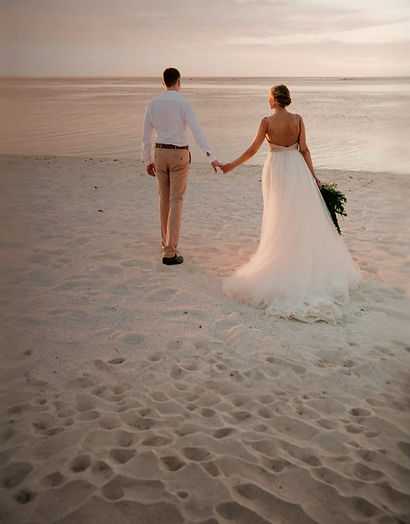


Bilingual Wedding Ceremony Tips: How to Keep Every Guest Included
In Southwest Florida, bilingual weddings are more than common—they're a reflection of real families, cultures and relationships.
Whether you're blending English and Spanish or incorporating another language entirely, a bilingual ceremony creates an opportunity to make every guest feel welcomed, connected and included.
But there is one challenge many couples discover quickly:
📌 A bilingual ceremony should feel natural—not repetitive.
When designed correctly, guests stay emotionally connected regardless of which language they speak.
Planning a wedding in Naples, Fort Myers, Estero, Bonita Springs, Marco Island or anywhere in Southwest Florida? Dazzling Vows offers bilingual officiant services, coordination, décor and rentals designed around meaningful experiences and smooth ceremony flow.
📞 Call or text: 239-302-0720

Start By Deciding How Languages Will Be Used
The first step is deciding how the languages will fit into the ceremony.
Helpful questions include:
✓ Which language feels most natural for the couple?
✓ Which language do most guests understand?
✓ Will both families be represented equally?
✓ Which moments matter most emotionally?
Answering these questions early creates a stronger ceremony structure.
Don't Translate Every Single Sentence
One of the biggest mistakes couples make is repeating every sentence word-for-word.
While the intention is good, the result often feels:
❌ Too long
❌ Repetitive
❌ Slow-moving
❌ Less emotionally engaging
Instead, consider:
✓ Translating important moments only
✓ Alternating languages by section
✓ Summarizing key ideas
✓ Keeping transitions intentional
The goal is inclusion—not duplication.
Want a bilingual ceremony that feels natural instead of repetitive?
Dazzling Vows offers bilingual officiant services designed to create ceremonies that feel smooth, emotional and inclusive.
📞 Call or text: 239-302-0720
Use Smooth Language Transitions
Guests should understand why the ceremony is moving between languages.
Good transitions help create:
✓ Better flow
✓ Less confusion
✓ More engagement
✓ Stronger emotional connection
Simple introductions and natural pauses often make a major difference.
Give Both Languages Emotional Weight
Emotion should never belong to only one language.
Ideas that work well include:
✓ Storytelling in one language and vows in another
✓ Blessings shared across both languages
✓ Readings divided intentionally
✓ Important moments represented equally
This creates balance without making the ceremony feel divided.
Choose Someone Truly Comfortable In Both Languages
Knowing another language and leading a ceremony in another language are very different things.
A bilingual officiant should provide:
✓ Comfortable pronunciation
✓ Natural pacing
✓ Emotional delivery
✓ Cultural awareness
✓ Confidence during transitions
Guests notice when delivery feels effortless.
Consider Simple Ceremony Programs
A printed ceremony outline can help guests follow along without interrupting the ceremony itself.
Helpful additions include:
✓ Brief ceremony structure
✓ Short translations
✓ Explanations of traditions
✓ Ceremony order
Small details often make guests feel more included.
Keep Ceremony Length Comfortable
Bilingual ceremonies do not automatically need to be longer.
With proper structure, they can still feel:
✓ Efficient
✓ Emotional
✓ Personal
✓ Easy to follow
Most couples are surprised by how natural a bilingual ceremony can feel when the flow is designed intentionally.
Frequently Asked Questions About Bilingual Wedding Ceremonies
Will guests feel confused?
Not when the ceremony has a clear structure and intentional transitions.
Can we include two languages without making the ceremony longer?
Yes. Strategic wording prevents unnecessary repetition.
Do both partners need to speak both languages?
No. The ceremony should reflect comfort and authenticity.
Are bilingual weddings common in Southwest Florida?
Very common, especially English and Spanish ceremonies.
Related Articles
The Best Bilingual Ceremonies Feel Like One Shared Experience
Guests rarely remember exactly which language was spoken first.
They remember:
The connection.
The emotion.
The atmosphere.
The feeling of being included.
If you're planning a bilingual wedding ceremony in Southwest Florida and want every guest to feel connected and welcomed, Dazzling Vows is here to help.
📞 Call or text: 239-302-0720
Let's create something memorable together.


Comments